
There Once Was a World
The central characters I use in my small paintings are based on a Lorelei, a Japanese puppet I bought at a flea market and her French puppet husband. Later, I bought their child on eBay — a diminutive creature with the same spout mouth. The completed family became a metaphorical tool I use to stage allegorical human stories. The characters’ imaginary settings include pastoral landscapes and industrial sites constructed from combinations of old junkyard machinery parts, photographs and stills from You Tube factory videos.
Read More
Simultaneously old-fashioned and contemporary, naive and sophisticated, my content and painting style are intentionally at odds. Rejecting certain aspects of Modern Art and Post Modernism, the expressive brushwork of Abstract Expressionism and a focus on surface over illusion for example, I’ve purposefully painted in an earnest, restrained and understated way. Deliberately, I’ve resurrected some Old Master’s academic techniques which include thin layers of delicate glazes and body color over a black and white grisaille, chiaroscuro (though off-kilter) atmospheric perspective, and in some, a modified Flemish palette. Thus, in both content and technique I am striving to combine the folksy and the classical.
Part puppet/part human, Lorelei could be every peasant, immigrant, orphan or artist in every sweatshop, factory, studio, or day job, in Poland, or Russia, or an industrial city like Cleveland, my hometown, in its faded glory of down-trodden industrial buildings full of pipes and machines, the uses of which are mysterious. Lorelei is my metaphor for perplexity, paradox and a woman’s predicament. In context, she symbolizes the conflict between reverie and creativity on the one hand, and secular practicality, the tasks and work of this world on the other.
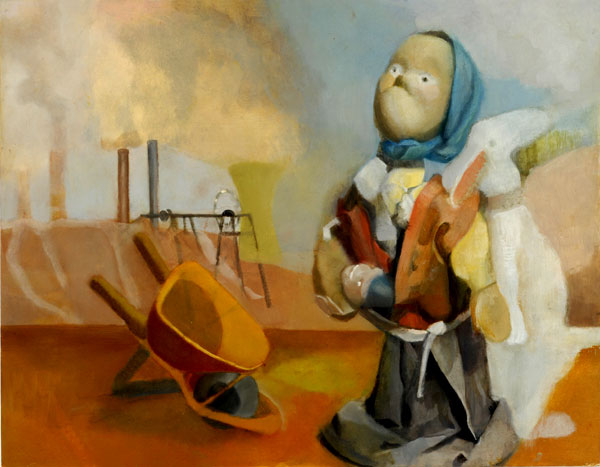
Eulogy
2006/08, Oil on wood panel, 13.75 x 10.75 inches
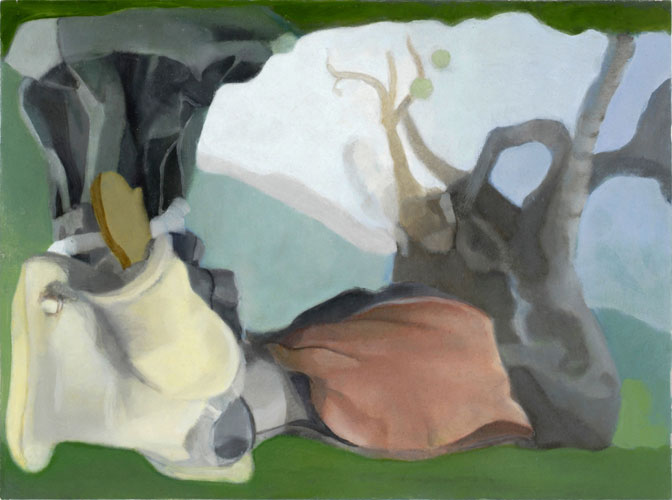
Apple Doesn’t (to my mother)
2009, Oil on wood panel, 11 x 15 inches
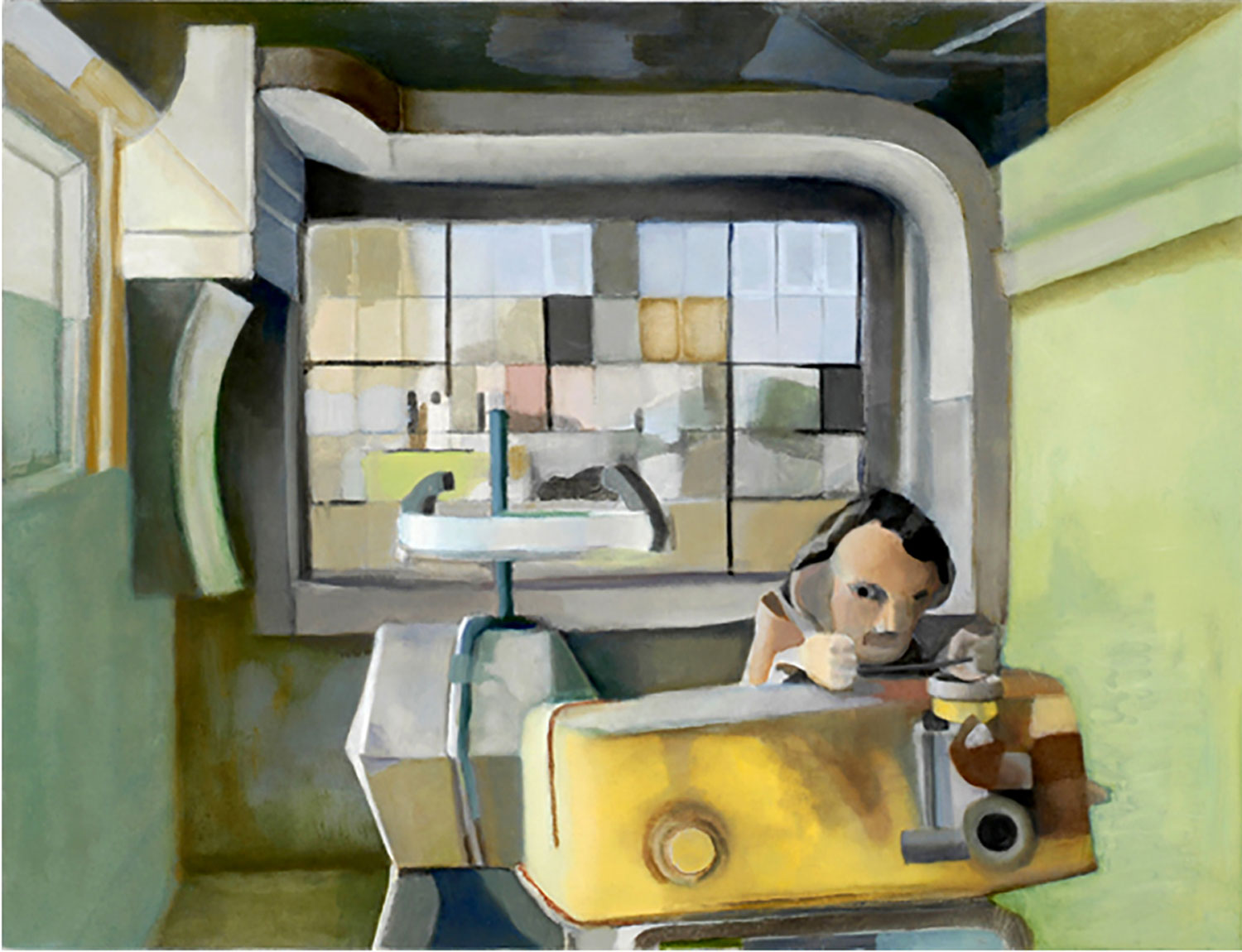
Shop
2009, Oil on wood panel, 20 x 26 inches
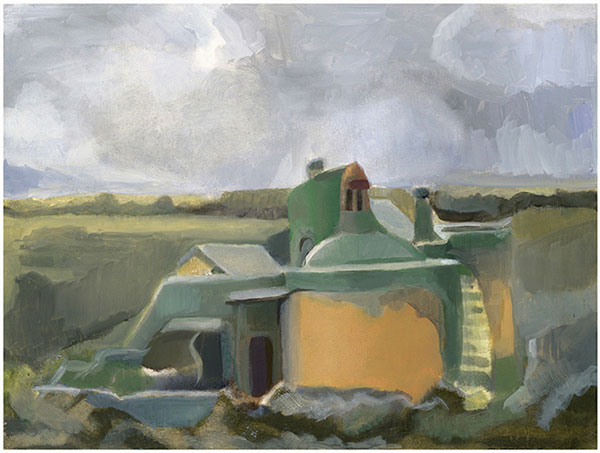
Lorelei’s Earthship
2008, Oil on wood panel, 9 x 11.5 inches
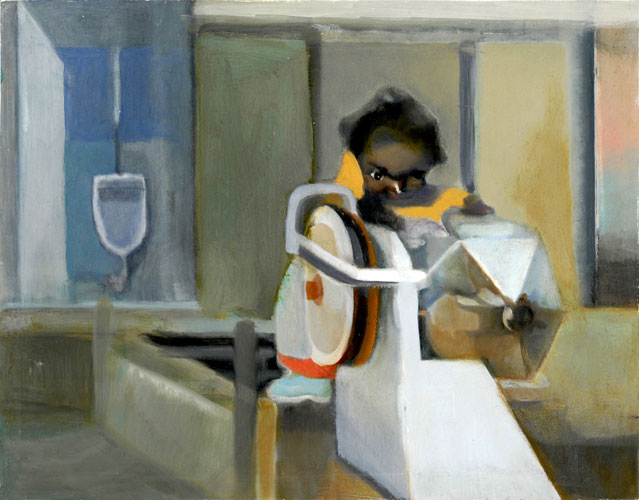
Oeuvre
2008/09, Oil on wood panel, 9 x 10.5 inches
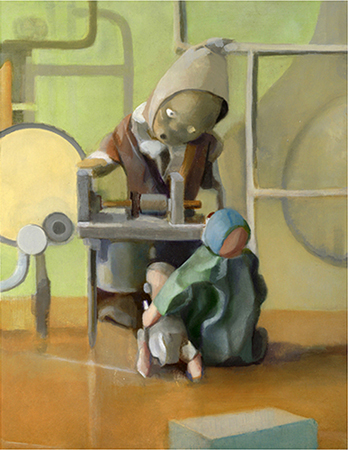
Working Woman 3
2008, Oil on wood panel, 13.75 x 17.75 inches
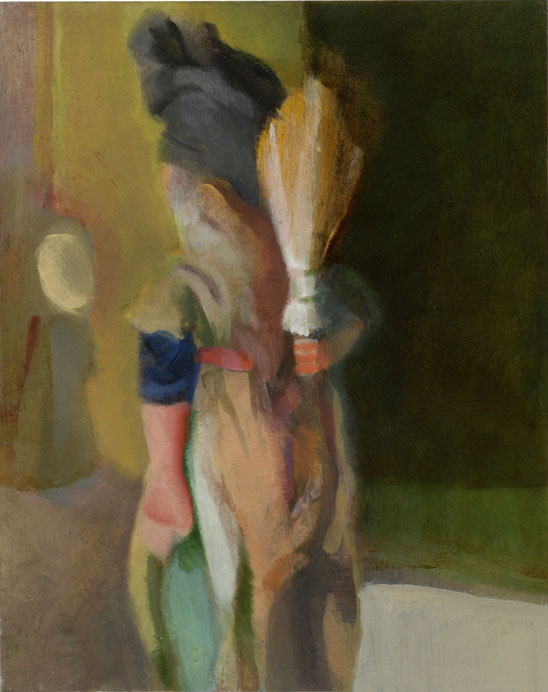
Lorelei + the Witch
2007/08, Oil on wood panel, 8 x 10 inches
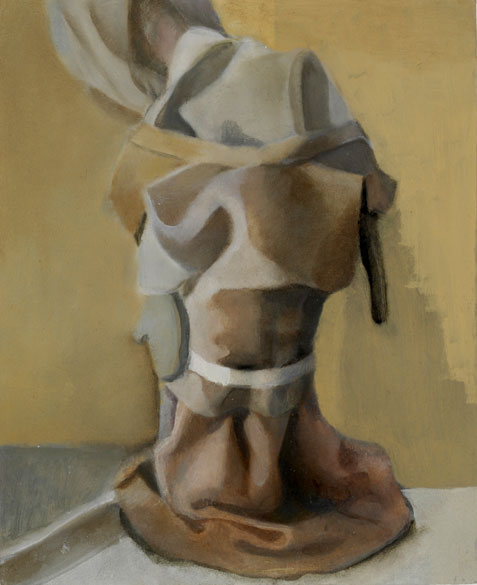
Turned Around
2008, Oil on wood panel, 8 x 10 inches
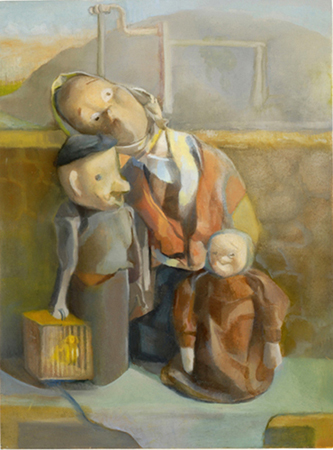
Family
2006, Oil on wood panel, 10.75 x 13.75 inches
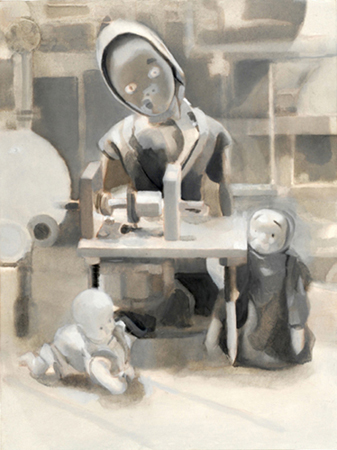
Working Woman 1
2007, Oil on wood panel, 11.75 x 15.75 inches
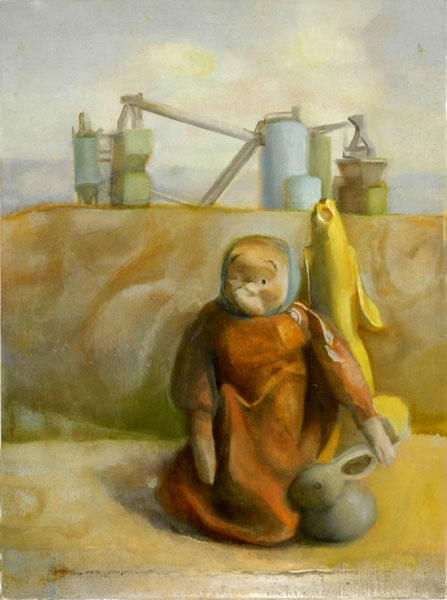
Child
2006, Oil on wood panel, 8 x 10 inches
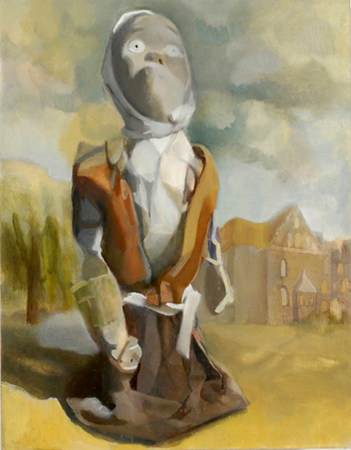
Asylum
2008, Oil on wood panel, 10.75 x 13.75 inches
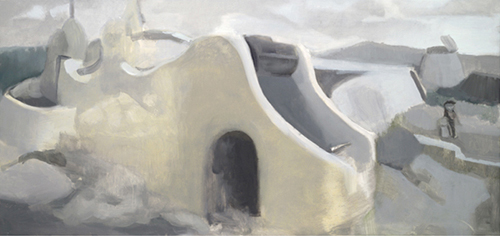
Earthship 2 (study)
2008, Oil on wood panel, 12.5 x 26 inches
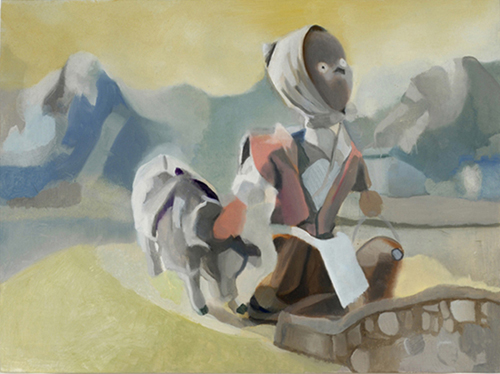
Fourth Flee
2007/08, Oil on wood panel, 11 x 14 inches
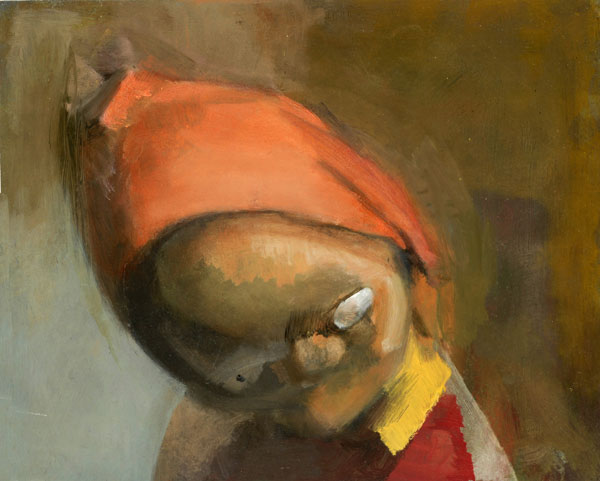
Younger Self Head
2009, Oil on wood panel, 8 x 10 inches
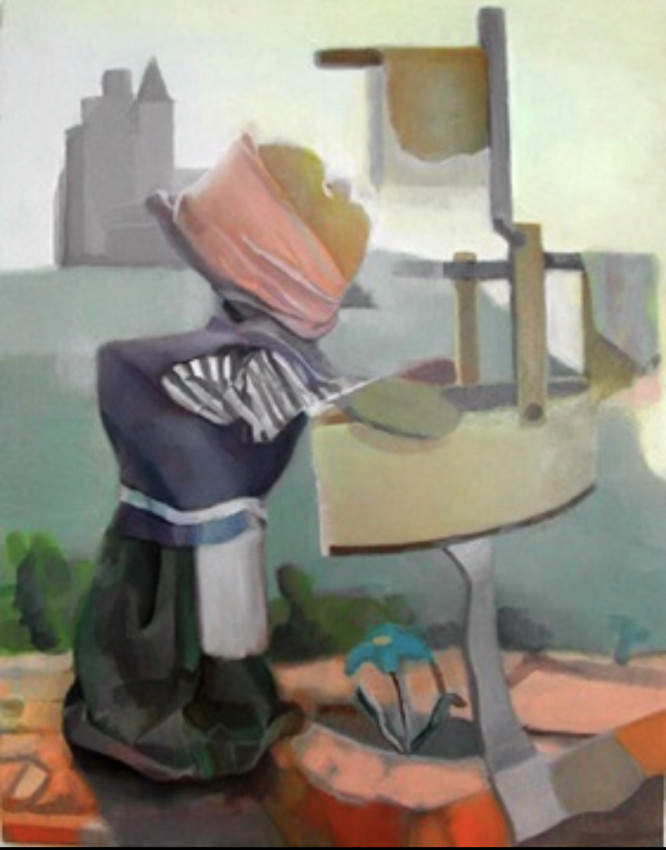
Rags
2009, Oil on panel, 14 x 11 inches